
Updated
Goal-Setting Guide
OKRs vs. KPIs
They get used interchangeably, but they answer different questions — one drives change, the other monitors health. Most teams actually need both, used for different things.
Product Preview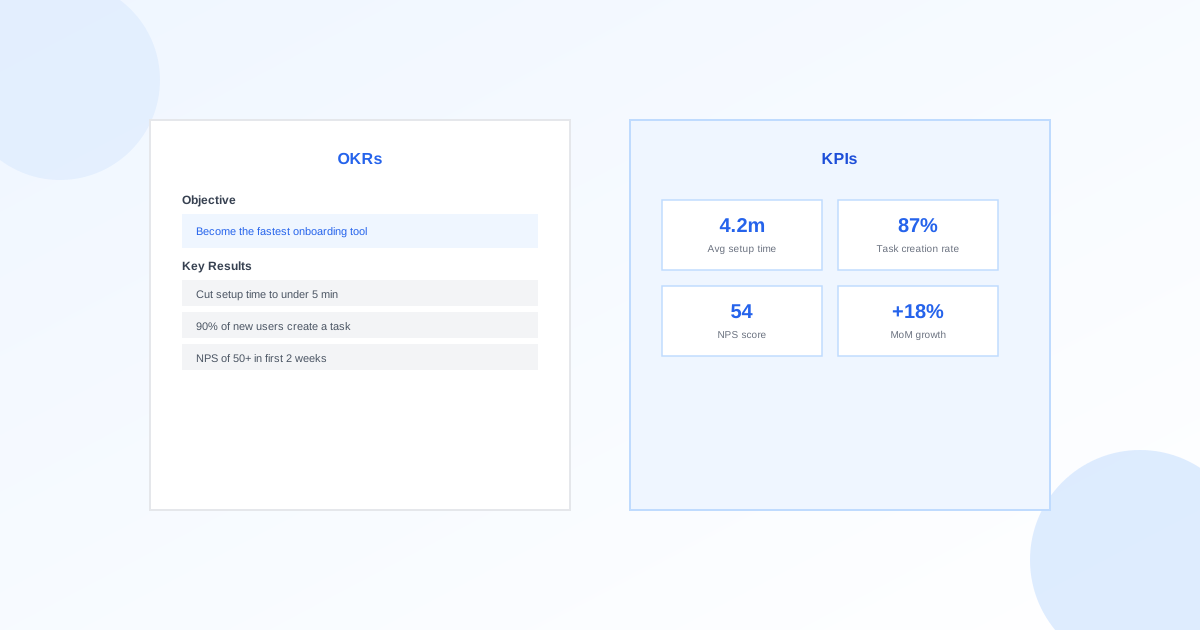
Side-by-Side Comparison
| Aspect | OKRs | KPIs |
|---|---|---|
| Purpose | Drives change — sets an ambitious direction for a defined period | Monitors health — tracks an ongoing metric against a target |
| Time horizon | Typically quarterly, tied to a specific push | Continuous — tracked weekly, monthly, or in real time |
| Ambition level | Deliberately stretch — 70% achievement is often considered a win | Expected to be hit — falling short signals a real problem |
| Structure | One objective, 2-4 measurable key results | A single number tracked against a threshold |
| Changes over time | Reset or replaced every cycle as priorities shift | Stays consistent — you're tracking the same thing quarter over quarter |
| Best answers | "What are we trying to change this quarter?" | "Is the business healthy right now?" |
Using Both Together
Let KPIs run continuously in the background — they tell you when something needs attention
When a KPI is off-track, that's often exactly what your next OKR should address
Don't turn a KPI into a key result by just adding a target — OKRs should represent a genuine push, not routine monitoring
Review KPIs weekly or monthly; review OKR progress at a fixed cadence tied to the cycle length
Keep the total OKR count small — 1-3 objectives per team, per quarter, is plenty
Track Progress Toward Both
Link tasks to the objective they support and let My First Task's reporting show whether the work is actually moving the number.