
Updated
Methodology Comparison
Agile vs. Waterfall
Neither methodology is universally “better” — each optimizes for a different kind of risk. Here's how to tell which one actually fits your project.
Product Preview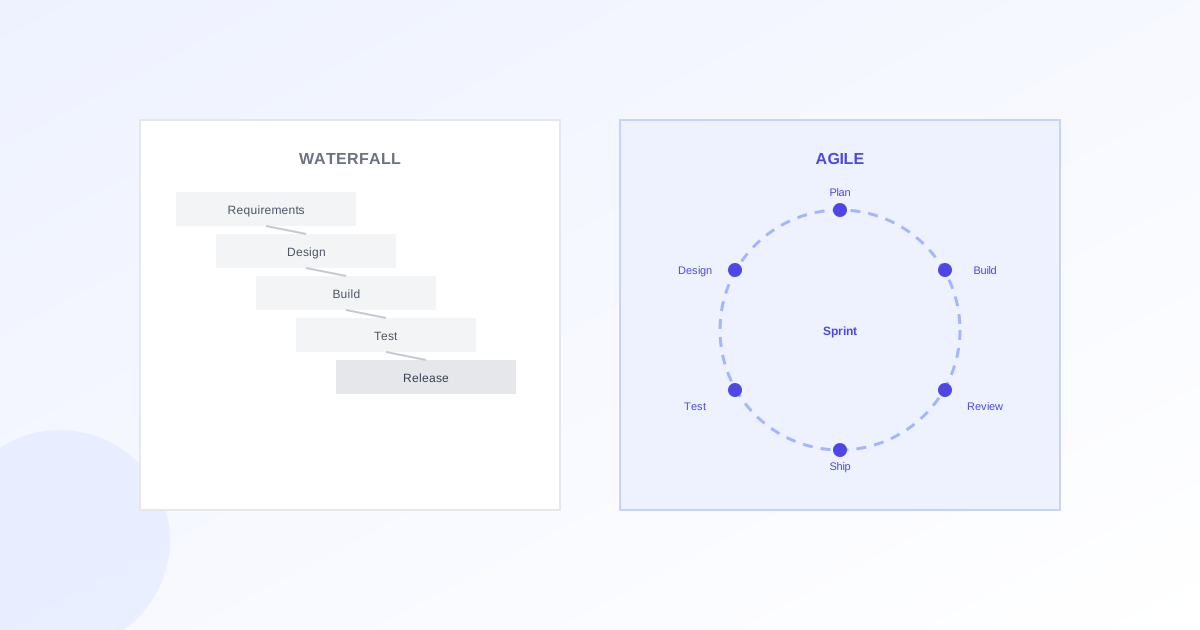
Side-by-Side Comparison
| Aspect | Agile | Waterfall |
|---|---|---|
| Planning | Short cycles, re-planned every sprint | One detailed plan up front, rarely revisited |
| Change tolerance | Expects and absorbs changing requirements | Change requires formal re-scoping |
| Delivery | Incremental — working software every sprint | Single delivery at the end of the project |
| Customer feedback | Continuous, built into every cycle | Mostly at the start and the very end |
| Documentation | Lightweight, just enough to move forward | Comprehensive, produced before build starts |
| Best for | Products with evolving requirements | Fixed-scope, regulated, or contractual work |
| Risk profile | Risk surfaces early, in small increments | Risk surfaces late — often at final delivery |
Which One Should You Use?
Choose Agile When...
Requirements will likely change as you learn
You can ship and get feedback incrementally
The team is co-located or overlaps in working hours
Stakeholders can review work every 1-2 weeks
Choose Waterfall When...
Scope, budget, and deadline are fixed by contract
Regulatory or compliance sign-off gates each phase
Requirements are genuinely stable and well understood
Stakeholders are only available at fixed milestones
Most real teams run a hybrid: waterfall-style milestones for contractual or budget checkpoints, with agile sprints doing the actual delivery work in between.
Run Either Methodology in My First Task
Use sprint boards for agile teams or milestone timelines for phased delivery — switch views without switching tools.